SSC CGL - Detailed Guide 2025
Self-Paced Course

Maurya Empire and Post-Mauryan Period
Reference: Lucent GK, NCERT Class 6–12
Maurya Empire (321 BCE – 185 BCE)
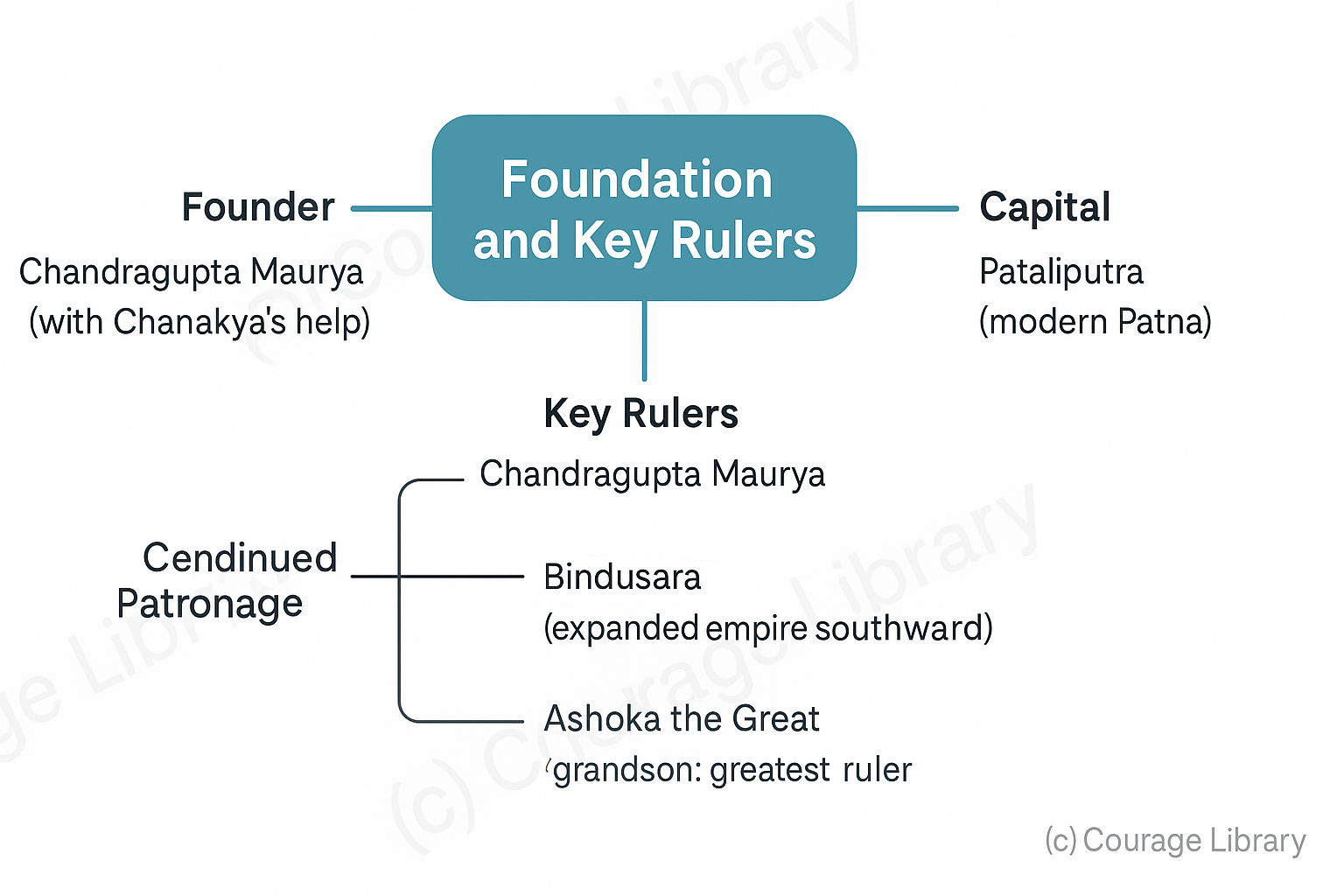
Foundation and Key Rulers
- Founder: Chandragupta Maurya (with Chanakya’s help)
- Capital: Pataliputra (modern Patna)
- Key Rulers:
- Chandragupta Maurya
- Bindusara (expanded empire southward)
- Ashoka the Great (grandson; greatest ruler)
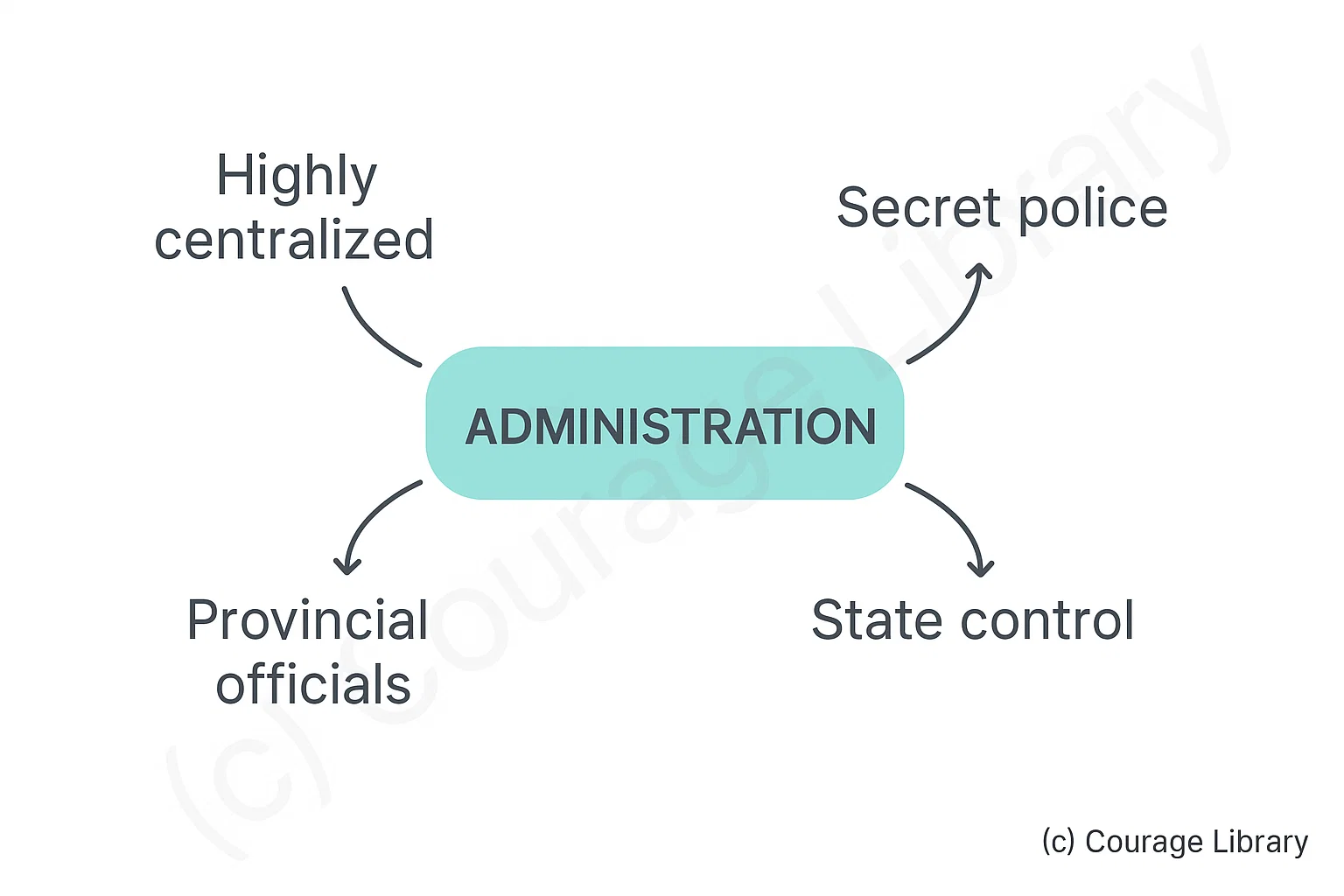
Administration
- Highly centralized government
- Provinces governed by royal officials (Mahamatras)
- Secret police and intelligence network (as per Arthashastra)
- State control over trade, mining, and agriculture
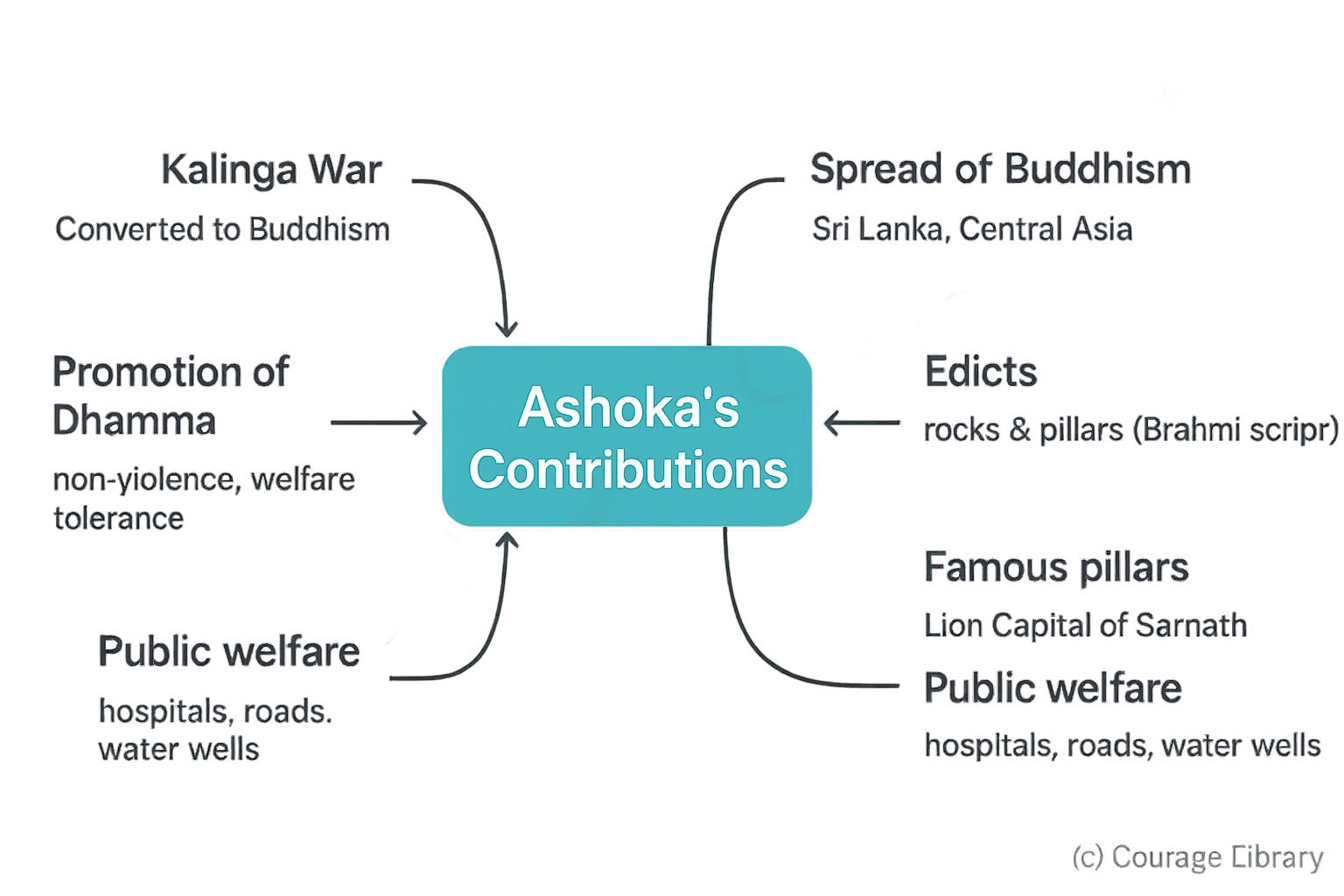
Ashoka’s Contributions
- Kalinga War: Brutal war, led to Ashoka’s conversion to Buddhism
- Promotion of Dhamma: moral code based on non-violence, tolerance, welfare
- Spread of Buddhism within India and abroad (Sri Lanka, Central Asia)
- Edicts of Ashoka: inscriptions on rocks and pillars in Prakrit using Brahmi script
- Famous pillars: Lion Capital of Sarnath (India’s national emblem)
- Public welfare projects: hospitals, roads, water wells
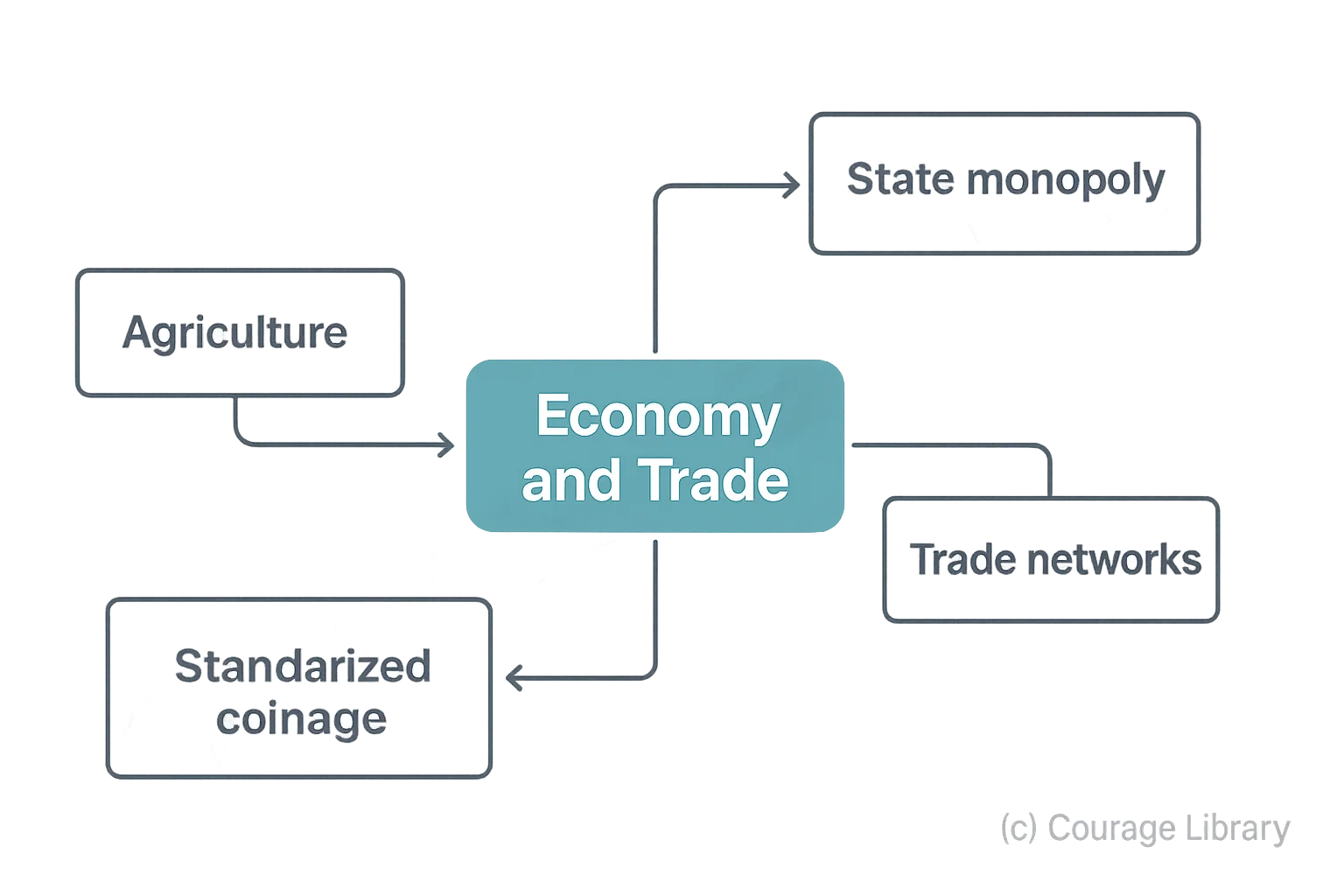
Economy and Trade
- Agriculture mainstay
- State monopoly on key resources (salt, iron)
- Extensive trade networks including contacts with Greece and Central Asia
- Use of standardized coinage
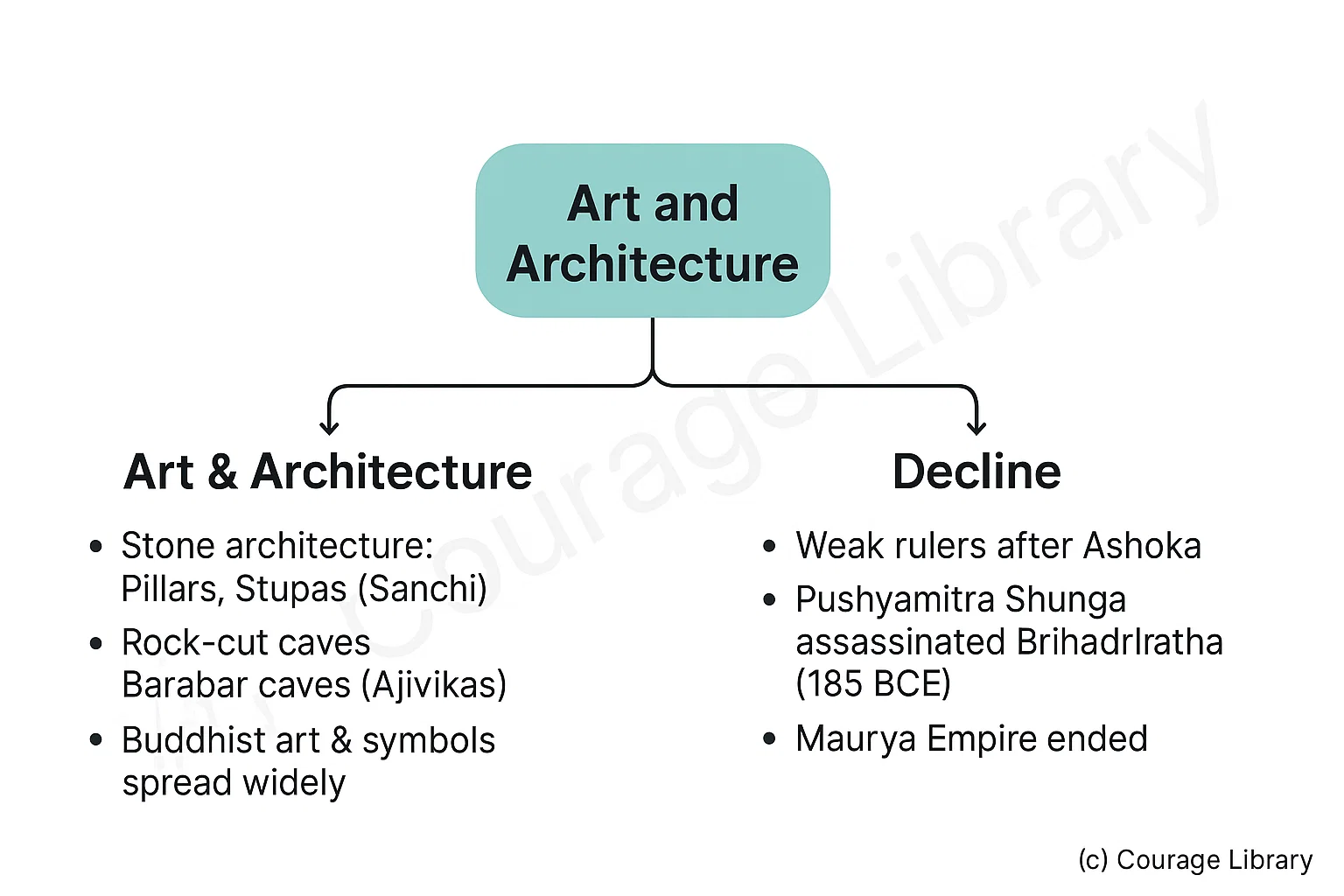
Art and Architecture
- Development of stone architecture: Pillars, Stupas (e.g., Sanchi Stupa)
- Rock-cut caves (Barabar caves for Ajivikas)
- Spread of Buddhist art and symbols
Decline
- Declined after Ashoka’s death due to weak rulers
- Last Maurya ruler Brihadratha assassinated by Pushyamitra Shunga (185 BCE)
Post-Mauryan Period (185 BCE – 300 CE)
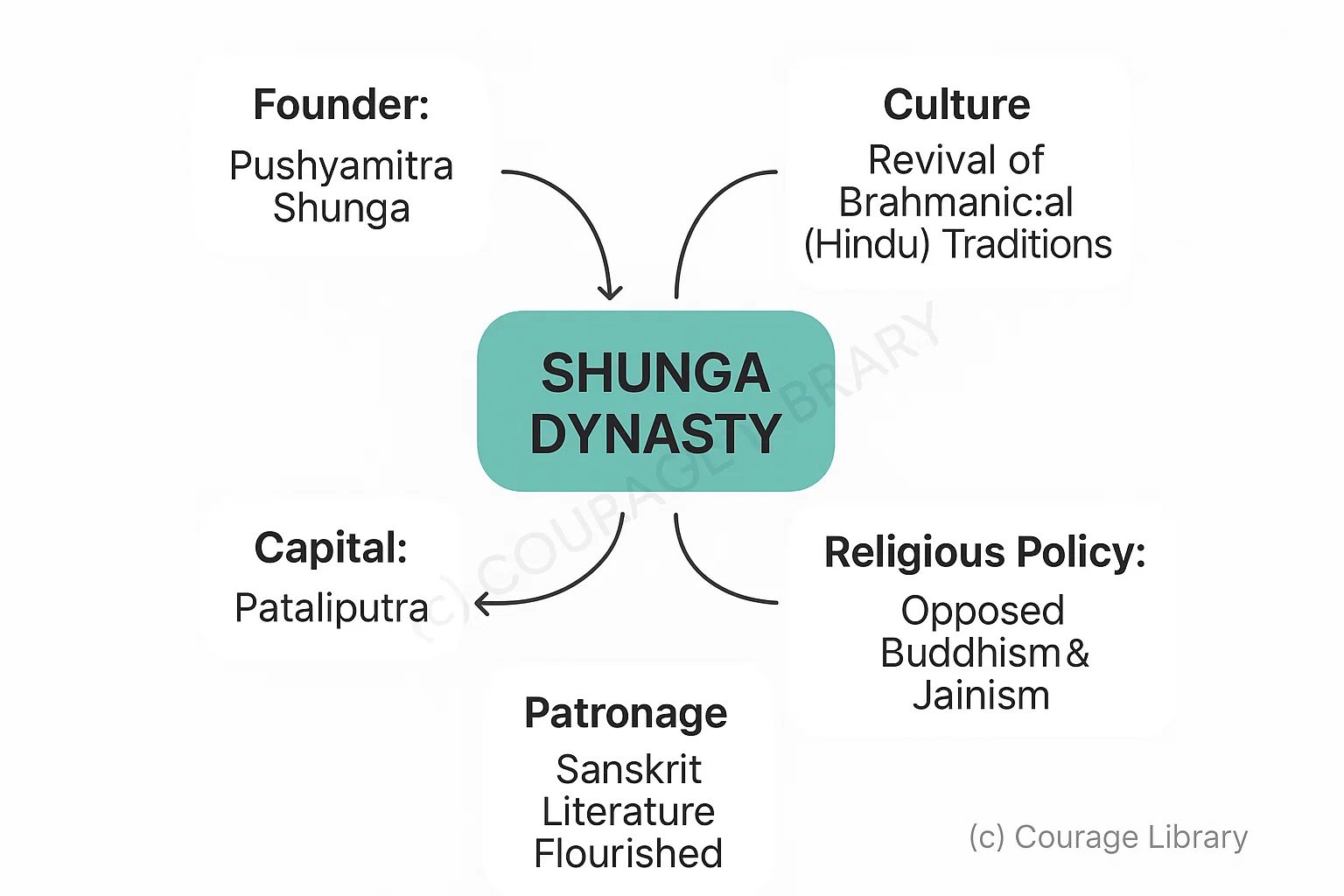
Shunga Dynasty
- Founder: Pushyamitra Shunga
- Revival of Brahmanical/Hindu culture
- Capital: Pataliputra
- Generally opposed to Buddhism and Jainism
- Patronage of Sanskrit literature
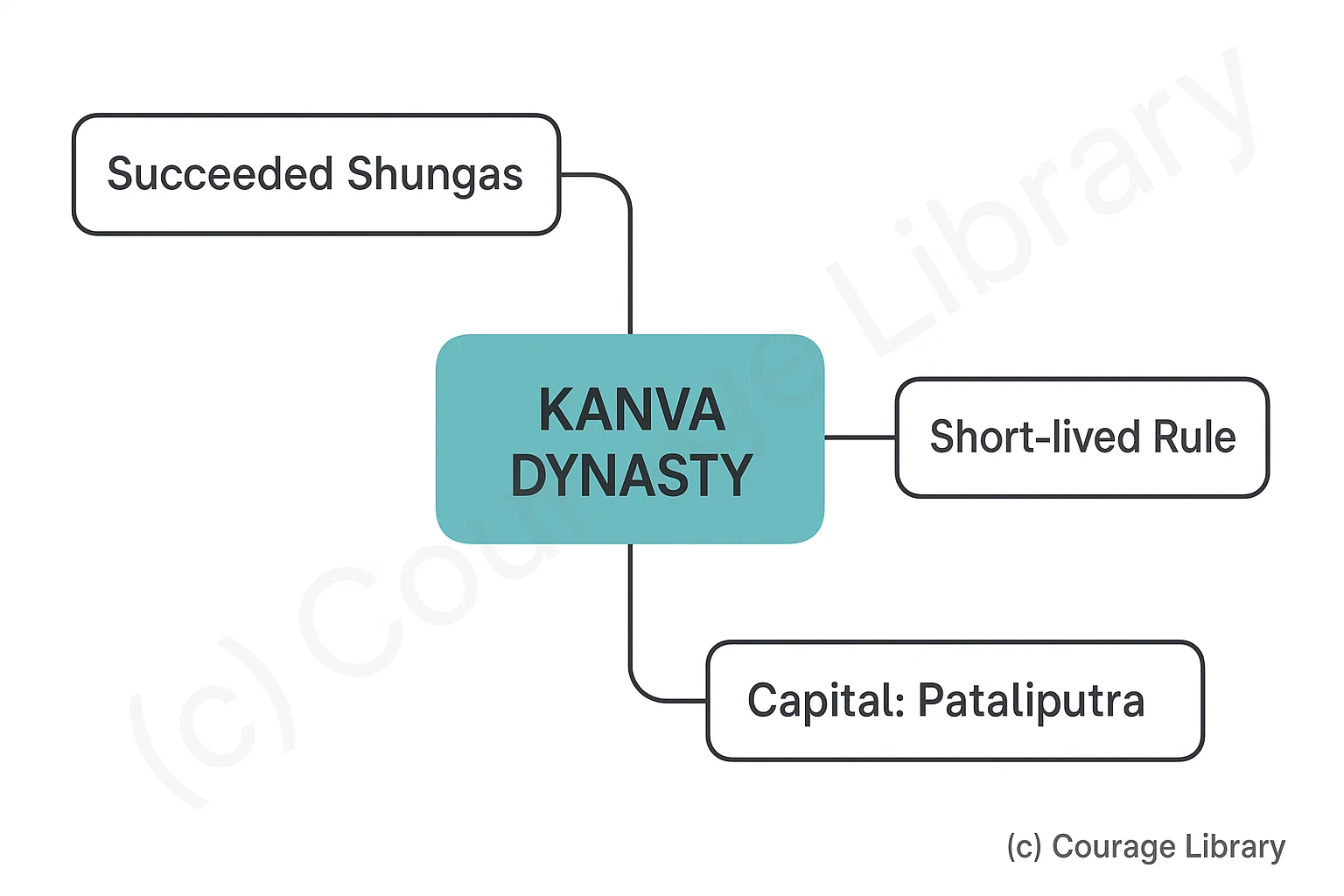
Kanva Dynasty
- Succeeded Shungas, short-lived rule
- Also ruled from Pataliputra
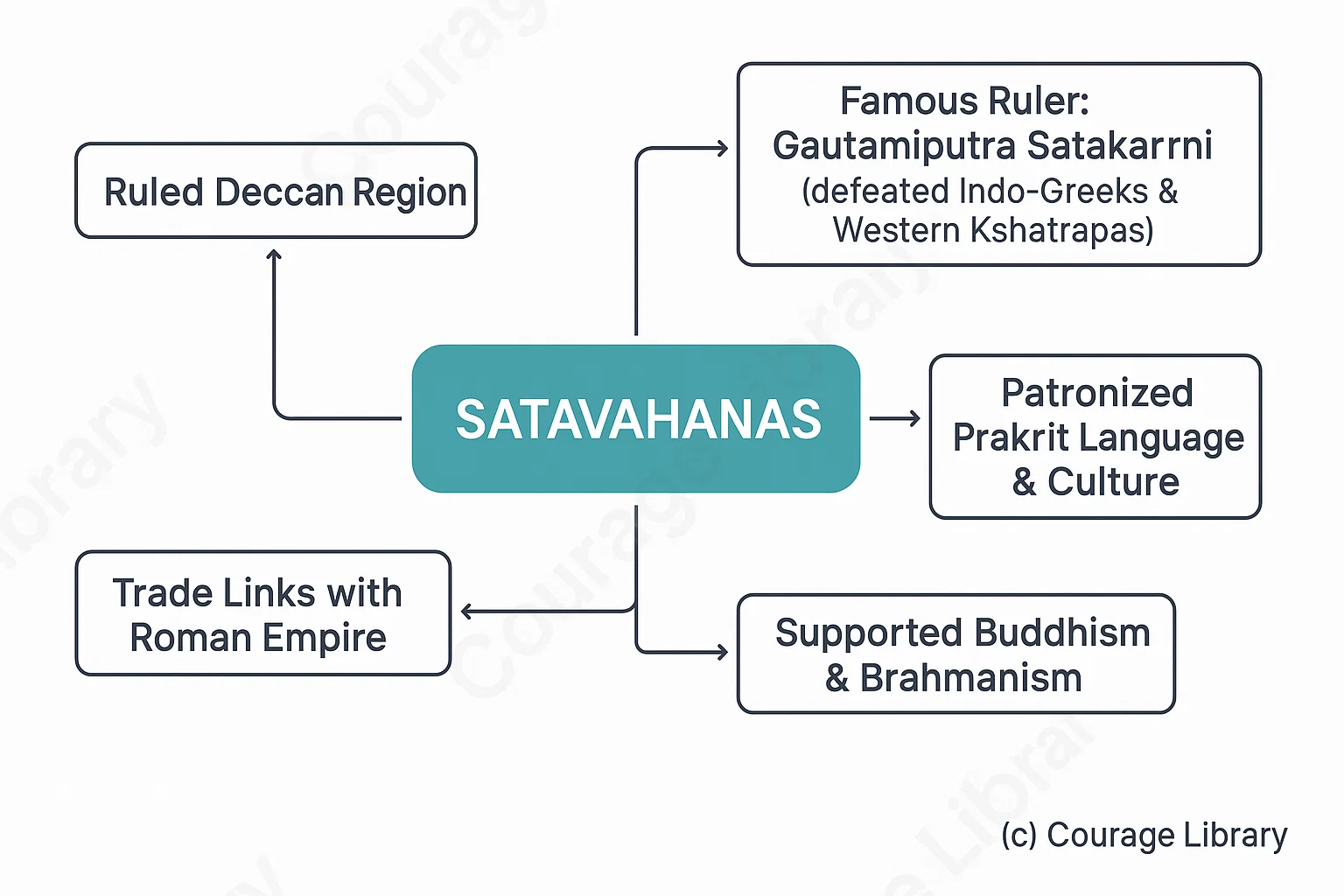
Satavahanas
- Ruled Deccan region
- Capital: Pratishthana (Paithan)
- Famous ruler: Gautamiputra Satakarni (defeated Indo-Greeks and Western Kshatrapas)
- Patronized Prakrit language and culture
- Supported both Buddhism and Brahmanism
- Important trade links with Roman Empire
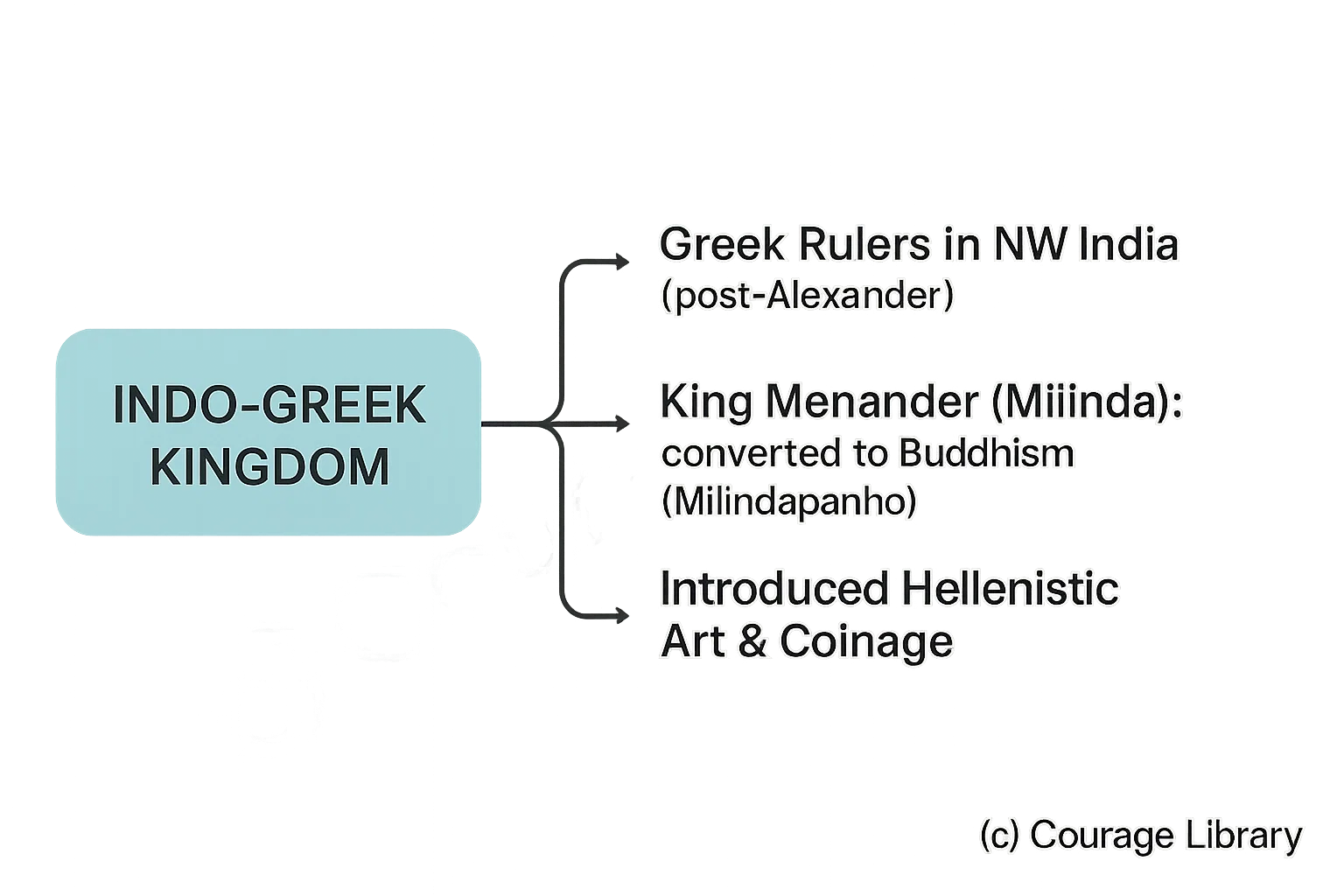
Indo-Greek Kingdom
- Greek rulers in NW India after Alexander’s successors
- King Menander (Milinda): converted to Buddhism (discussed in Milindapanho)
- Introduced Hellenistic art and coinage
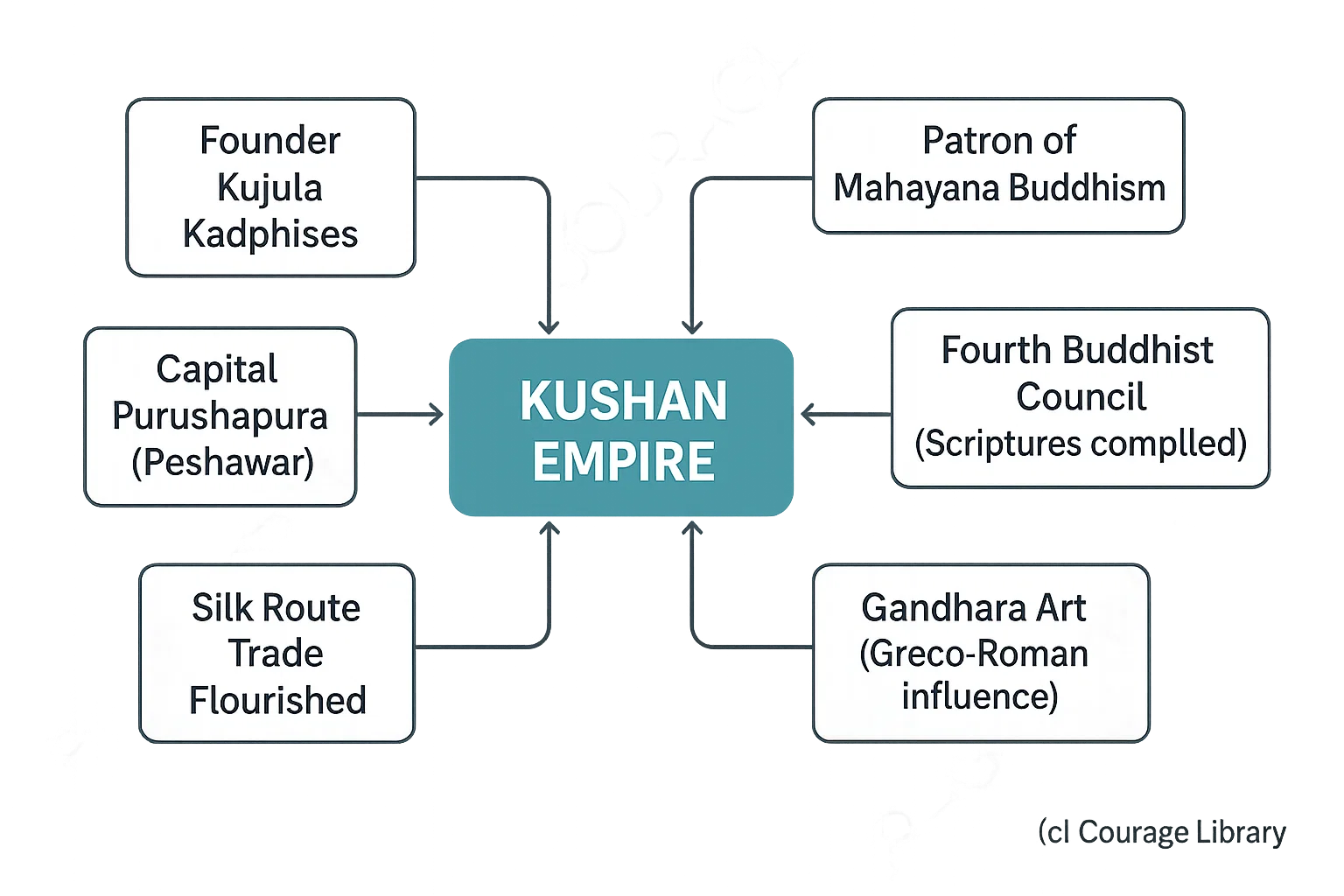
Kushan Empire
- Founder: Kujula Kadphises
- Greatest ruler: Kanishka
- Capital: Purushapura (Peshawar)
- Patron of Mahayana Buddhism
- Convened Fourth Buddhist Council (compiled Buddhist scriptures)
- Developed Gandhara art (Greco-Roman influence)
- Trade flourished via Silk Route
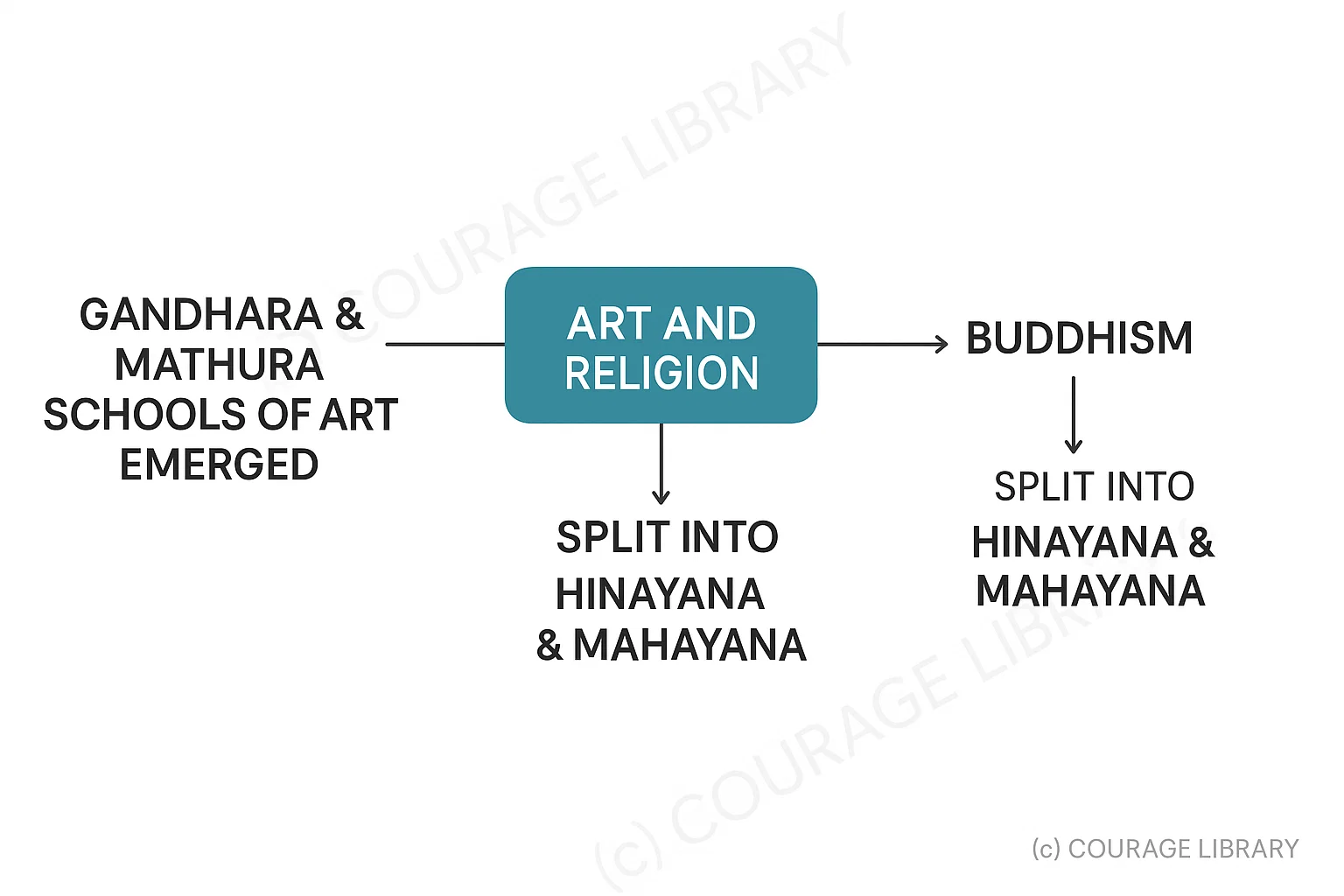
Art and Religion
- Gandhara and Mathura schools of art emerged
- Buddhism divided into Hinayana and Mahayana sects
- Vaishnavism and Shaivism became prominent Hindu sects
Quick Revision Points
| Topic | Important Point |
|---|---|
| Maurya founder | Chandragupta Maurya |
| Maurya capital | Pataliputra |
| Ashoka’s conversion | After Kalinga War |
| Ashoka’s edicts | Rock and Pillar Edicts (Prakrit) |
| Last Maurya ruler | Brihadratha |
| Successor dynasty | Shunga dynasty (Pushyamitra) |
| Satavahana capital | Pratishthana (Paithan) |
| Kushan greatest ruler | Kanishka |
| Buddhist council | Fourth Buddhist Council (Kanishka) |
| Indo-Greek ruler | Menander (Milinda) |
| National emblem origin | Lion Capital of Ashoka (Sarnath) |
Developed By Jan Mohammad
Next
Start Your SSC CGL Journey Now!
Join Courage Library to experience disciplined study and expert support.
Be a Couragian!